Ghent European Youth Capital 2024, the European Space Agency and The Belgian Science Policy Office would like to invite you to the first EYC Space talk about SNOW and CRYOSPHERE.
Agenda
Talk 1: Making sense of snow by Hans Lievens, Ghent University
Snowcapped mountains are of a sheer beauty – everyone will agree. However, behind the intriguing aesthetics of snow crystals are lined-up water molecules. These water resources sustain the lives of about one-sixth of our planet’s population, thrive our economy, and regulate our climate. The monitoring of snow and its water resources is therefore of critical importance. And yet, this remains one of the largest unknowns in the cryosphere. “How much snow do we have on Earth?”, “Which regions are affected most by climate change and face a shrinking snowpack or earlier melt?” and “How are these snowpack changes impacting the water availability for agriculture, for hydropower generation, or for the more than a billion people relying on snow for drinking water?”. These critical questions today remain unsolved. Satellite observations can monitor the state of the snow from space and thus help answering these questions. However, snow remote sensing also faces severe challenges, especially in mountain regions with deep snow. In this seminar, H. Lievens aims to make sense of snow, from the detailed processes that are acting at the tiny scale of the snow crystal, towards the global scale relevance of snow in a climate perspective, all with a specific focus on how spaceborne observations can play a major role.
Talk 2: Have you ever wondered where climate change is hitting the hardest? by Paolo Cipollini, European Space Agency
The impact of a warming climate is not the same everywhere. One aspect of the Earth system that is suffering the most dramatic changes is the cryosphere, that is the ‘world of ice’. This includes mountain and polar glaciers, ice caps, ice sheets and sea ice. Ice is melting at an alarming rate: every year we lose one trillion tonnes of ice – that’s the equivalent of a giant cube of ice with each side measuring 10 kilometres. This is bad news for our planet because it disrupts both the water cycle and the energy cycle. Water from ice that melts over land eventually flows into the sea, and contributes to sea-level rise, one of the most pressing problems for society. Loss of ice from mountain glaciers depletes a crucial reservoir of water for the dry season, worsening the effects of droughts. The energy cycle is also badly affected: ice and snow are bright, and therefore reflect a large proportion of incoming sunlight back out to space. However, as ice diminishes, the darker land or sea beneath is exposed, which soaks up more solar radiation, exacerbating further warming. In summary, monitoring ice, both ice on land and ice floating in the ocean, is crucial to understanding climate change and to helping predict what may happen in the future if the world continues to warm, as well as to help safeguard the pristine, fragile polar environment. But the world of ice is often difficult to reach – most polar regions are inhospitable, so how can we monitor it? In this talk, I will illustrate how satellites help us to monitor the cryosphere, and they do help a lot! From space we get sustained, global observations of the remote polar regions, as has been demonstrated by pioneering missions such as ESA’s CryoSat. I will describe what parameters we measure, how we measure them and what we expect from three new missions being developed within the Copernicus Sentinel Expansion programme. The three missions CRISTAL, CIMR and ROSE-L measure in different ways and complementary to each other. From 2027 onwards, we will significantly enhance our monitoring of the changes happening in the ‘world of ice’.
Speakers
Hans lievens
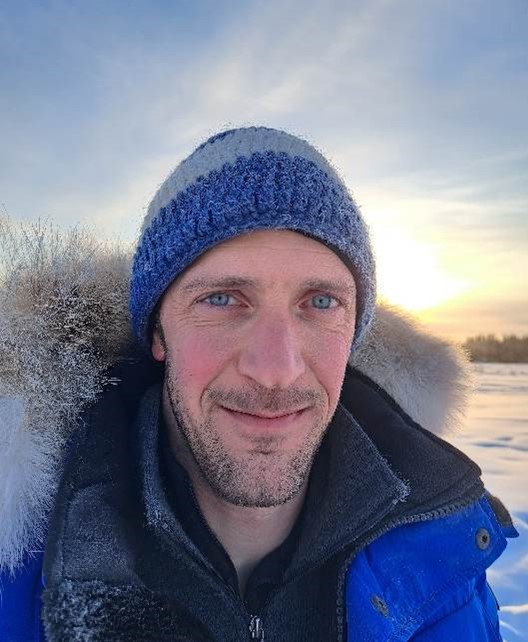 |
Hans Lievens (Turnhout, 1984) is researcher at Ghent University, investigating the remote sensing of snow mass in mountain regions. He is also founder and director of Snowcap, a start-up company providing satellite-based snow monitoring services to support hydropower operations. Hans studied Bio-Science Engineering and received the Ph.D. degree in applied biological sciences from Ghent University in 2011, with a dissertation on radar remote sensing of soil moisture. From 2012 to 2018, he was granted a Postdoctoral Fellowship with the Research Foundation Flanders (FWO), to investigate the use of satellite observations in land surface models to improve our understanding of the water cycle. During this fellowship, he has been visiting research scientist at Princeton University (USA), CESBIO (France), and Monash University (Australia). In 2016-2017, he joined the NASA Goddard Space Flight Center as a visiting scientist, where he initiated research activities on snow remote sensing after participating to the NASA SnowEx’17 field campaign in Colorado. From 2018-2022, he was postdoctoral research scientist at KU Leuven, studying snow mass retrieval from radar remote sensing, and is now continuing this work at Ghent University since 2022. |
Paolo Cipollini
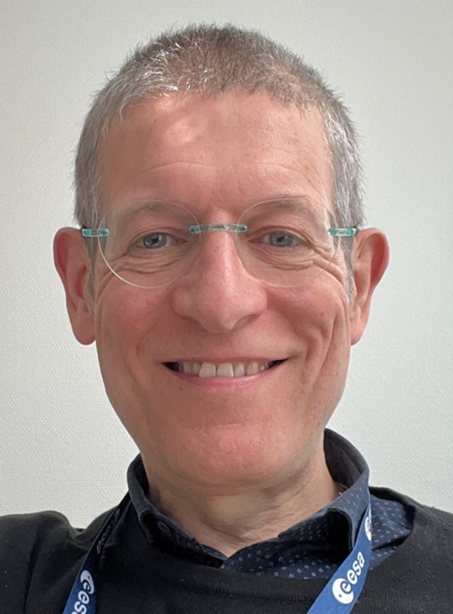 |
Paolo Cipollini (Florence, 1966) is an engineer and satellite oceanographer with the European Space Agency at ESA–ESTEC in the Netherlands. After his MEng (Electronics) and PhD in Environmental Monitoring with the Universities of Pisa and Florence in Italy, Paolo spent large part of his career at the National Oceanography Centre in Southampton, UK. Here, he studied ocean processes such as planetary waves with a host of remote-sensing data, with a particular focus on satellite radar altimetry and contributed to developing coastal zone altimetry. More recently, he worked for the ESA Climate Office on development and exploitation of climate data records of Essential Climate Variables over the oceans. In his current post as Ocean and Ice Senior Scientist with the Earth & Mission Science Division at ESA–ESTEC, Paolo supports the development and implementation of ESA and Copernicus future satellite missions for oceanography and cryospheric science. In practice, Paolo ensures that future missions are ‘fit for purpose’ to respond to the pressing needs of society to understand, forecast and manage climate change and its impacts. |
Practical information
- When: Wednesday April 17 from 20:00 to 21:30 (doors open @19:30)
- Where: Bibliotheek De Krook, Miriam Makebaplein 1, 9000 Ghent
- Who can attend: Anybody interested by earth observation, sciences, adventure…
- Registration: Free but mandatory via the following link:
EYC Space Talks #1: Snow & Cryosphere Tickets, Wed, Apr 17, 2024 at 8:00 PM | Eventbrite - Language: English