Published 24 hours ago
Watching forests turn red and gold is an autumn tradition in many parts of the world. NASA’s PACE satellite now offers a new perspective on the spectacle, tracking changing leaf pigments across the entire planet every day or two.
PACE’s Ocean Color Instrument observes Earth in 286 spectral bands. Among them are wavelengths sensitive to chlorophyll, carotenoids and anthocyanins – the pigments responsible for green, yellow, orange and red foliage.
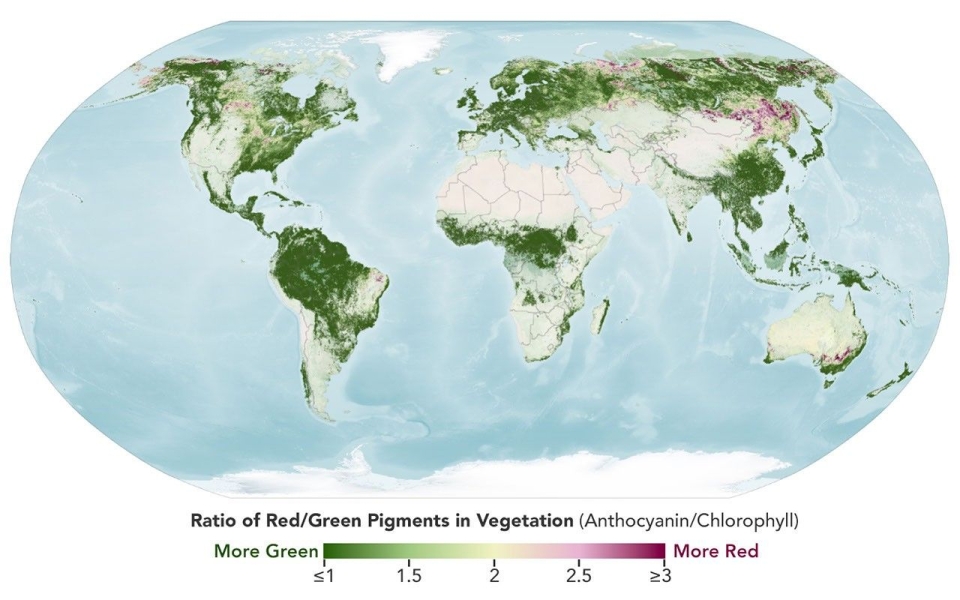
PACE observations show how autumn redness shifted across the Northern Hemisphere between late September and mid-October 2026. Red and yellow areas indicate vegetation with increasingly high levels of red pigment relative to green.
Image: NASA Earth Observatory/Lauren Dauphin, using PACE data courtesy of Skye Caplan/NASA Goddard Space Flight Center
The measurements are useful for more than finding spectacular autumn scenery. Changes in vegetation pigments can reveal when plants enter seasonal decline, but may also provide clues about drought, insect damage and other forms of stress.
Scientists are now combining PACE observations with photographs collected on the ground through the GLOBE programme. These observations help them check what the satellite is actually seeing and could ultimately improve studies of vegetation cycles, the carbon cycle and even wildfire risk.
Based on: NASA Earth Observatory, Hunting Red Leaves with Satellites, 26 October 2026.