Publié le 10 septembre 2026
A powerful eruption of Anak Krakatau in early September sent ash and volcanic gases high above Indonesia. Satellites captured the event from space as it disrupted air travel and affected air quality as far away as Jakarta.
Anak Krakatau, the active volcanic island between Java and Sumatra, erupts frequently, but its latest burst was unusually intense. Explosive activity continued for more than 24 hours, producing vast plumes that were observed by both Landsat 8 and the Suomi NPP satellite on 5 September 2026.
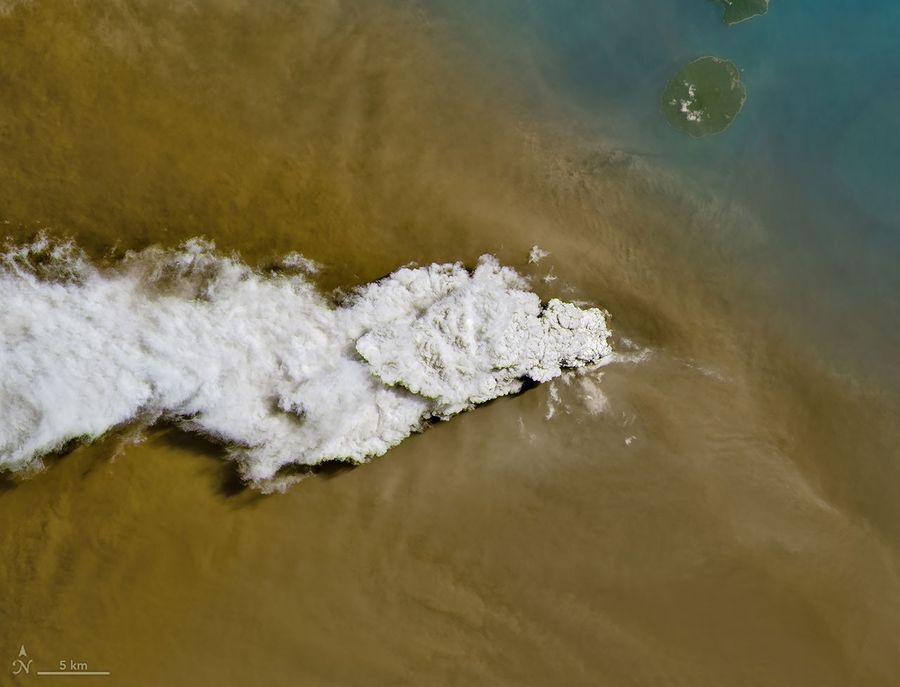
Anak Krakatau erupts on 5 September 2026, sending a bright plume of volcanic gases above a much larger cloud of ash. The scene was captured by the Operational Land Imager (OLI) aboard Landsat 8.
Image credit Image: NASA Earth Observatory/Michala Garrison, using Landsat data from the U.S. Geological Survey.
The eruption quickly had consequences far beyond the small volcanic island. By 6 September, ash had risen to around 6 kilometres east of the volcano and as high as 15 kilometres to the west. Eight airports on Java and Sumatra were temporarily closed, disrupting nearly 3,000 flights.
The most explosive phase subsided the following day, although Anak Krakatau remained active and continued producing smaller eruptions. Satellite observations help track how ash and gases spread through the atmosphere—information that is important for aviation, air-quality monitoring and assessing volcanic hazards.
Based on: NASA Earth Observatory, Anak Krakatau Rumbles Again, 9 September 2026.