Published on 15 September 2026
In the early hours of 15 September, two new European Earth observation satellites lifted off together from Europe’s Spaceport in Kourou, French Guiana. At 03:21 CEST, a Vega-C rocket carried ESA’s scientific FLEX satellite and Copernicus Sentinel-3C into space.
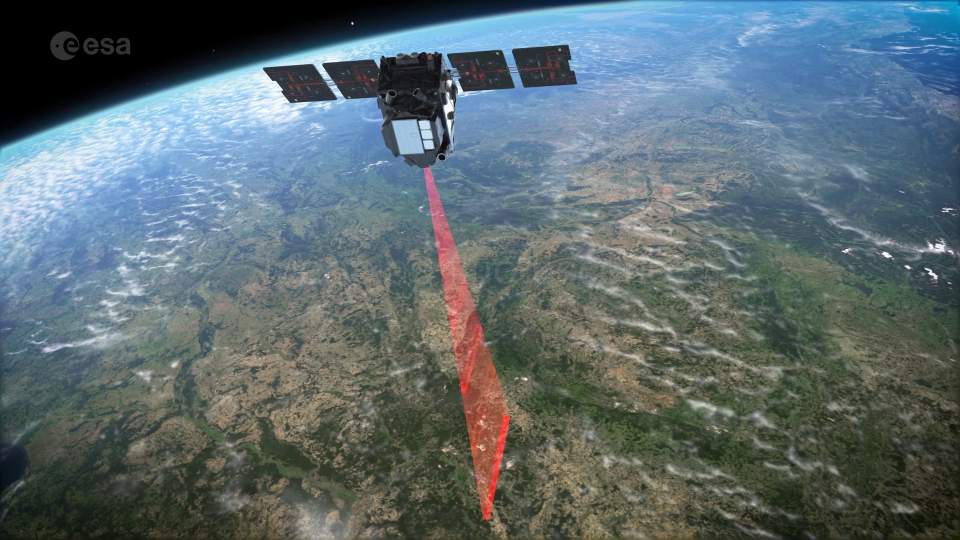
Two satellites aboard one launcher, but with different and complementary tasks: FLEX will provide scientists with an entirely new view of plant health and photosynthetic activity, while Sentinel-3C will strengthen the continuous monitoring of our oceans, land, ice and atmosphere.
Revealing the secret glow of plants
FLEX – de Fluorescence Explorer – is the European Space Agency's newest Earth Explorer mission. Its distinctive task is to measure an extremely faint light signal emitted by plants during photosynthesis.
When a plant absorbs sunlight, a tiny fraction of that energy is re-emitted as fluorescence. This signal is invisible to the human eye, but it carries valuable information about how efficiently a plant is photosynthesising and how it is responding to its environment.
Using its highly sensitive FLORIS instrument, FLEX will map this fluorescence worldwide from an altitude of around 814 km. This will allow scientists to observe how vegetation responds to drought, heat and other environmental stresses – often before visible damage occurs.
The information will be valuable not only for agriculture and ecosystem monitoring, but also for climate research. Photosynthesis plays a central role in the global carbon and water cycles. A better understanding of plant activity will therefore help scientists determine how much carbon vegetation absorbs and how ecosystems respond to a changing climate.
Sentinel-3C ensures continuity for Copernicus
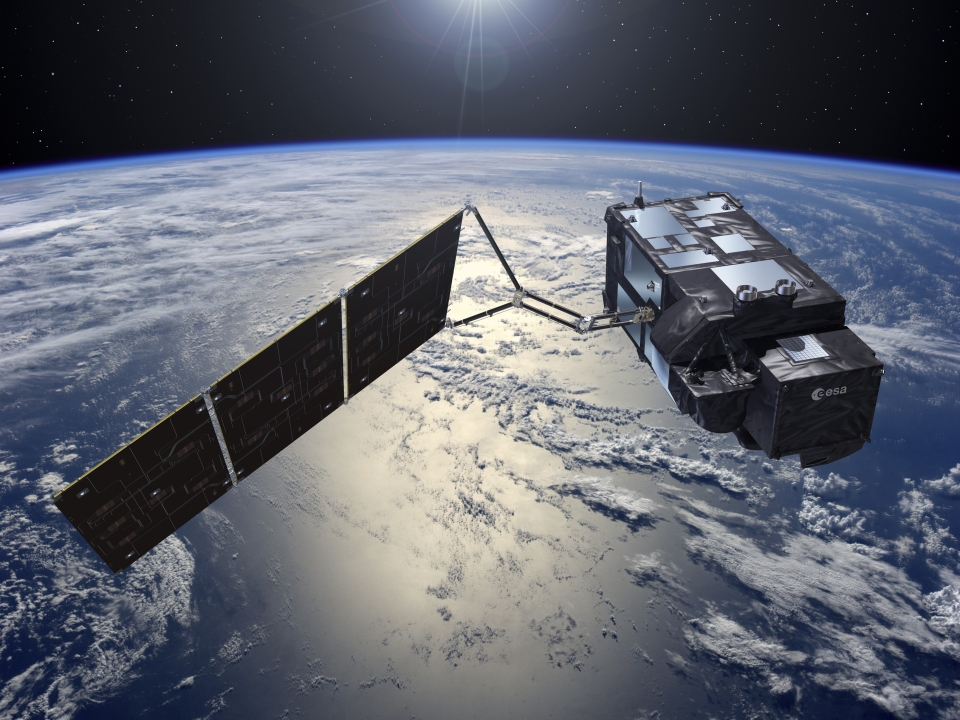
Sentinel-3C is the third satellite in the Copernicus Sentinel-3 fleet and joins Sentinel-3A and Sentinel-3B already in orbit.
The Sentinel-3 satellites systematically monitor Earth’s oceans, land, ice and atmosphere. Their observations are used to measure parameters such as sea- and land-surface temperature, ocean colour, sea level, vegetation and sea ice. These data are essential for climate research, ocean and weather forecasting, and a wide range of Copernicus services.
Sentinel-3C will ensure the continuity of these essential long-term observations while making the Sentinel-3 constellation more resilient. During routine operations, the Sentinel-3 mission is managed jointly by ESA and EUMETSAT on behalf of the European commission.
FLEX will also fly in tandem with a Sentinel-3 satellite. Complementary information from Sentinel-3 on clouds, aerosols, water vapour, surface temperature and vegetation will help scientists interpret FLEX’s fluorescence measurements even more accurately. Together, these observations promise an exceptionally comprehensive view of how vegetation functions on a global scale.
Belgian expertise in space and on the ground
Belgium has also made important contributions to the new missions. For FLEX, the Centre Spatial de Liège (CSL) played a crucial role in preparing FLORIS. In the centre’s thermal-vacuum facilities, the instrument was subjected to conditions reproducing the extreme environment of space to ensure that it would operate correctly once in orbit.
Several Belgian companies and research institutes are also contributing to different aspects of FLEX and Sentinel-3, from electronic components and engineering support to preparations for data processing and scientific exploitation. Belgian actors involved include CSL, Spacebel, Thales Alenia Space Belgium and VITO.
Belgium’s contribution will continue long after launch. Through BELSPO’s STEREO programme, Belgian researchers will be actively involved in the calibration, validation and scientific analysis of FLEX data. Researchers from UGent, ULiège and VITO, among others, are participating in international teams that will use the new observations to gain a better understanding of ecosystem stress, agricultural productivity, carbon uptake and the impacts of climate change.
Sentinel-3C data will also be made freely available to Belgian users through Terrascope, Belgium’s Earth observation platform.
Arnaud Vajda, Chairman of the BELSPO Management Committee