Published on 4 March 2026
Central Africa is home to the second-largest tropical rainforest on Earth - a vast ecosystem that plays a crucial role in conserving biodiversity and regulating the global climate.
Yet compared to the Amazon, the forests of the Congo Basin remain significantly understudied. This creates a major blind spot in our understanding of the global carbon cycle and how tropical forests respond to human disturbance.
To help close this gap, Belgian researchers from BELSPO’s AFROCARDS project joined forces with Congolese partners to investigate how forest ecosystems recover after disturbance - and how past land use continues to shape today’s forest structure.
Two Fundamental Questions
The research consortium set out to answer two key questions:
- How do forest carbon stocks and biodiversity evolve along gradients of forest succession?
- How do past human disturbances continue to influence forest structure today?
By combining field ecology, remote sensing, and land-surface modelling, the project brings together decades of Congo Basin research experience into a uniquely integrated scientific effort.
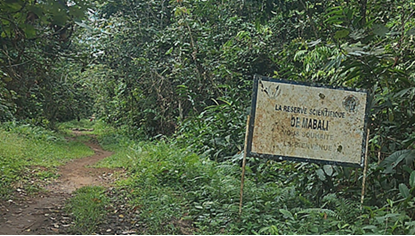 Figure 1: Entering the Mabali Man and Biosphere Reserve.
A Three-Month Field Campaign in Mabali
To address these questions, the team conducted a three-month field campaign in the Mabali Man and Biosphere Reserve, near Lake Tumba in the Democratic Republic of the Congo.
Located in a mosaic of terra firma forests, seasonally flooded forests, and regrowth areas, Mabali provides an ideal natural laboratory to study forest succession and recovery. The campaign was hosted by the Centre de Recherche en Ecologie Forestière (CREF), whose staff provided essential scientific and logistical support.
 Figure 2: Location of the Mabali Reserve on the shores of Lake NTumba
Measuring Forest Succession on the Ground
The core objective of the mission was to evaluate how forest canopy structure changes along a succession gradient — from young, previously disturbed stands to mature, intact forests.
To achieve this, the team established 20 permanent one-hectare monitoring plots. Within each plot, every tree was:
- Measured
- Mapped
- Tagged
- Identified
These long-term plots are essential for:
- Estimating biomass and carbon stock evolution
- Understanding species distribution across regrowth stages
- Tracking forest recovery over time
In addition, these plots also serve as critical in situ calibration and validation data for LiDAR and satellite models. By linking detailed field measurements to remote sensing data, local observations can be upscaled to regional forest assessments.

 Figure 3: On the road to set-up 20 permanent sampling plots
Mapping the Forest in 3D with LiDAR
Field measurements were complemented by airborne LiDAR surveys covering 1,500 hectares, collected using a dedicated drone system.
Unlike conventional satellite imagery — which mainly captures signals from the top canopy layer — LiDAR pulses penetrate the forest, revealing its full vertical structure, from canopy to understory.
This three-dimensional perspective allows researchers to:
- Quantify forest structural complexity
- Model structural evolution across successional stages
- Improve biomass and carbon stock estimates
These improvements are vital for strengthening climate models that depend on accurate tropical forest carbon data.

Figure 4: Preview of a Digital Surface Model built from the acquired Lidar data
Building Long-Term Scientific Partnerships
The campaign required the formation of local field teams and the deployment of advanced drone systems under challenging tropical conditions.
The project greatly benefited from the expertise and experience of CREF staff. Beyond its scientific contributions, the mission strengthened cooperation between Belgian and Congolese institutions and laid the groundwork for sustained, long-term research collaboration in the Congo Basin.
In one of the least understood yet most climate-critical forest regions on Earth, this work represents an important step toward closing a major knowledge gap in global carbon science.

Figure 5: The team behind the field campaign
The fieldwork was conducted by:
- Ikali MONKENGO-MO-MPENGE (Centre de Recherche en Ecologie Forestière CREF)
- Cicéron Mbuoli (Student, University of Bandundu)
- Laurent Nsenga Ndjike Kelema (WWF)
- Thibauld COLLET (PHD student, Gembloux Agro Bio Tech - ULiège)
- Trésor Mbavumoja (PHD student, Gembloux Agro Bio Tech - ULiège)
- Arthur Vanderlinden (PHD student, Gembloux Agro Bio Tech - ULiège)
- Jean-François Bastin (Professor, Gembloux Agro Bio Tech - ULiège)
Project team
UGent: Hans VERBEECK - Félicien MEUNIER - Marijn BAUTERS
ULiège: Jean-François BASTIN
UCLouvain: Pierre DEFOURNY
ERAIFT: Baudouin MICHEL
NASA: Sassan SAATCHI